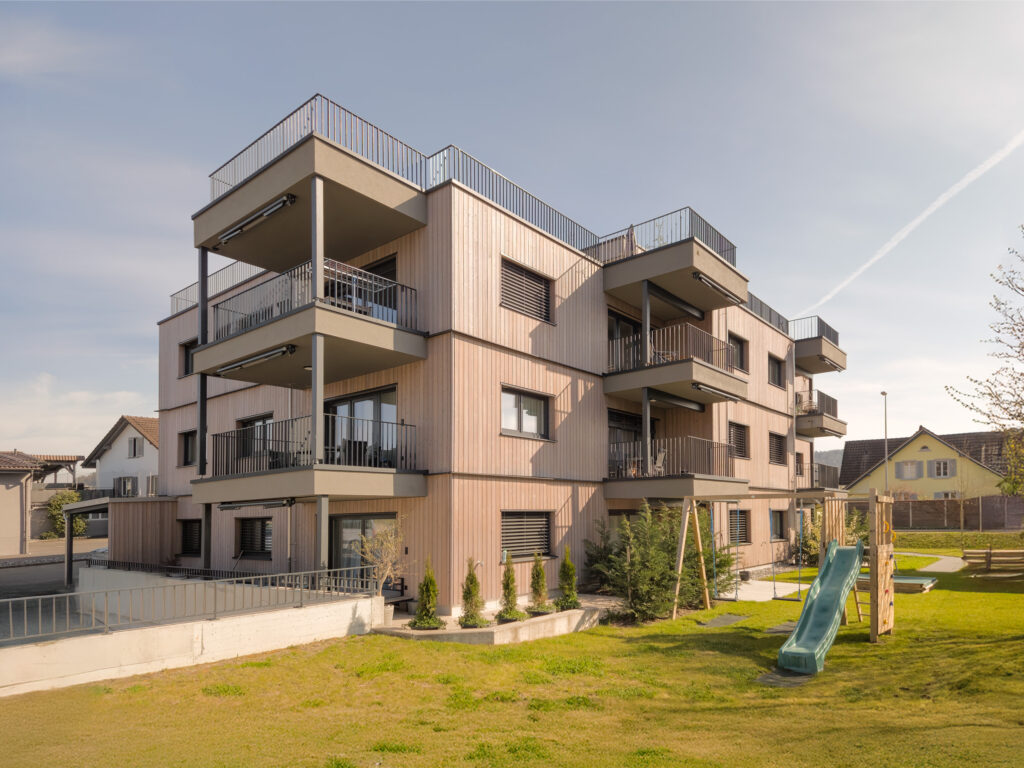
From Planning to Assembly in 180 days
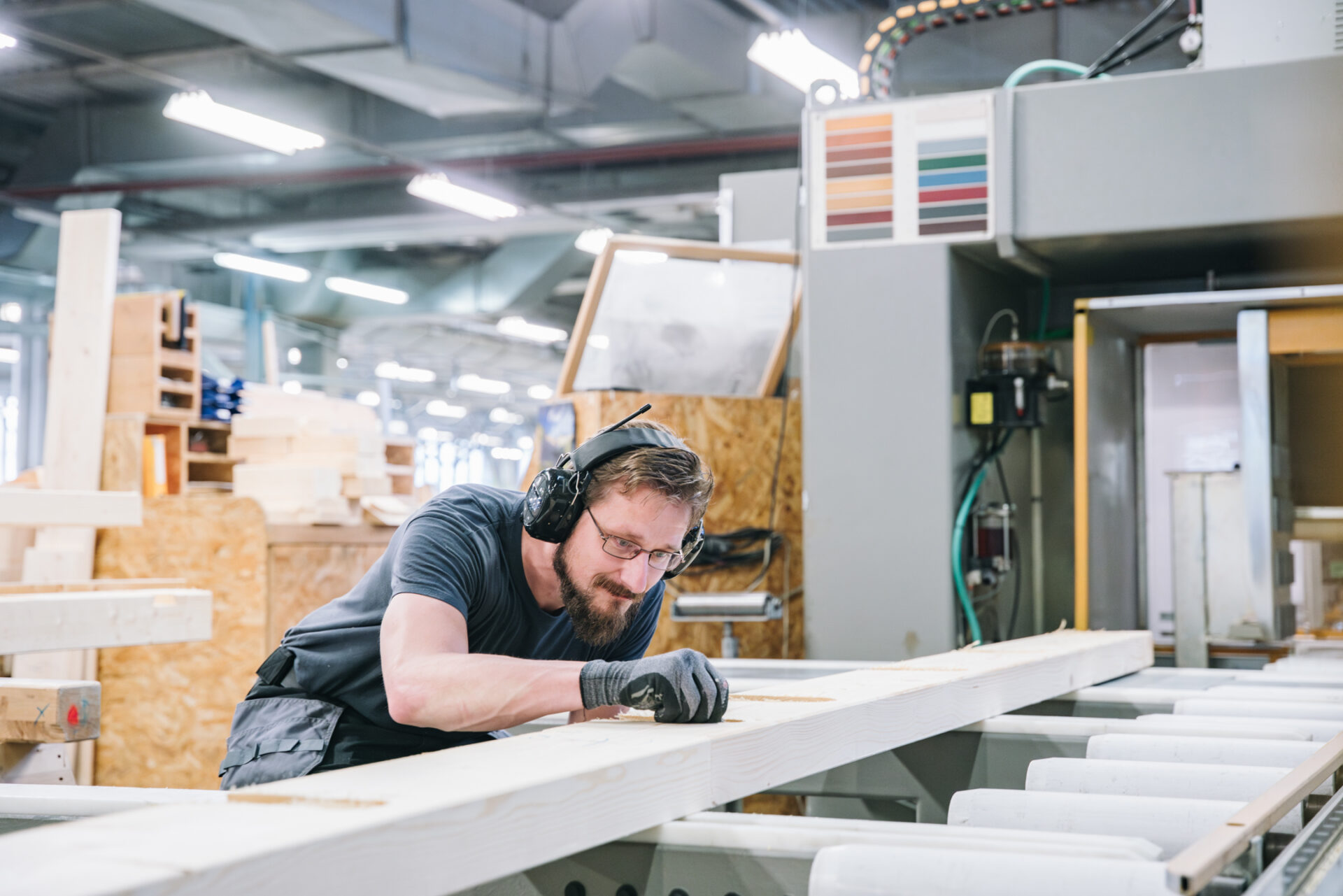
How Jelovica Delivers Speed, Precision, and Predictability in Prefabricated Timber Construction
In today’s European construction market, delivering projects on time is no longer primarily a question of materials or demand. The real constraint has become labour availability, site coordination, and schedule risk.
Prefabricated timber construction addresses these challenges not by simplifying buildings, but by reorganising how and where work is done. At Jelovica, our role is to take the most time-critical and labour-sensitive phases of a project and move them into a controlled, industrial environment — while keeping investors fully in control of scope, quality, and final execution.
This article explains how Jelovica supports developers and investors through the four key phases of a prefabricated timber project: planning & development, production, delivery, and assembly — and why this approach consistently results in faster, more predictable outcomes.
1.Planning and Development: Decisions Upfront, Certainty Downstream

Successful prefabrication begins long before production. In timber construction, early coordination replaces late-stage improvisation.
Jelovica provides comprehensive planning and development support to ensure that each project is technically feasible, compliant with local regulations, and optimised for industrial production. Our role in this phase is not architectural authorship, but technical translation — transforming architectural intent into a buildable, prefabricated system.
Manufacture and Assembly Planning
Each structural element of a Jelovica prefabricated building is designed using SEMA, the industry-leading software for timber construction. This allows us to model every wall, floor, and connection down to millimetre precision.
The benefit for investors and developers is clear:
- fewer interfaces between trades
- no ambiguity during production
- seamless assembly on site
By designing with manufacture and assembly in mind from day one, we eliminate common causes of delays later in the project lifecycle.
Structural Engineering and Static Plans
All load-bearing systems are engineered in accordance with EUROCODE 5 and relevant national standards (including SIA norms where applicable). Static calculations are adapted to country-specific regulations, seismic requirements, fire performance criteria, and acoustic demands.
This ensures that prefabrication does not compromise structural robustness — on the contrary, it standardises quality and compliance across projects and markets.
Development of Energy-Efficient Buildings
Energy efficiency is not treated as an add-on. Jelovica has decades of experience developing timber buildings that exceed regulatory requirements for thermal performance, airtightness, and long-term durability.
Our systems are based on validated data from realised projects, not theoretical models. For investors, this translates into lower operational risk, easier compliance with ESG frameworks, and long-term asset resilience.
2. Production: Industrial Precision, Controlled Quality
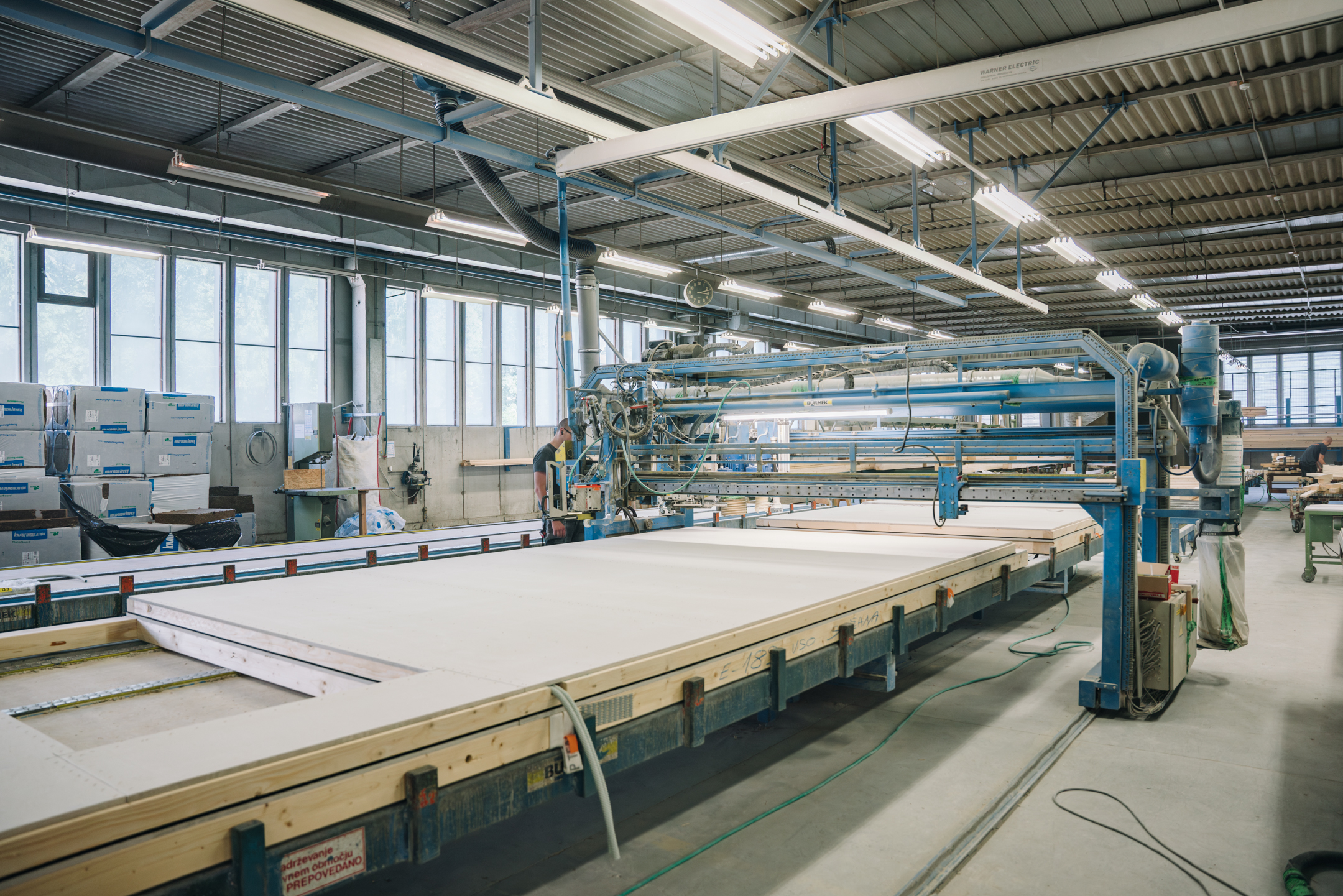
Once planning is complete and designs are frozen, the project moves into production — the phase where prefabrication delivers its greatest advantage.
Jelovica operates a modern 100% energy self-sufficient production line, powered entirely by renewable sources such as solar energy and hydropower. More importantly, production takes place in a controlled factory environment, independent of weather conditions and site constraints.
Certified Materials and Controlled Processes
Every material used in our prefabricated elements comes from certified European suppliers. All timber is delivered with certificates of origin and quality, ensuring full traceability.
Quality control is embedded into the production process itself:
- continuous internal checks
- recurring external audits
- regular testing by FMPA Stuttgart, one of Europe’s most respected independent control institutions
This systematic approach ensures consistent quality across both small and large-scale projects.
Integrated Systems, Reduced Site Complexity
Wherever possible, Jelovica integrates certified systems directly into prefabricated elements — including:
- windows
- shading solutions
- façade substructures
By incorporating these components in the factory, we reduce the number of operations required on site, lower coordination effort, and minimise dependency on additional subcontractors.
For developers facing labour shortages, this shift is crucial: work is completed where labour is available and predictable — not where it is scarce.
3. Delivery: Logistics as Part of the Construction Strategy
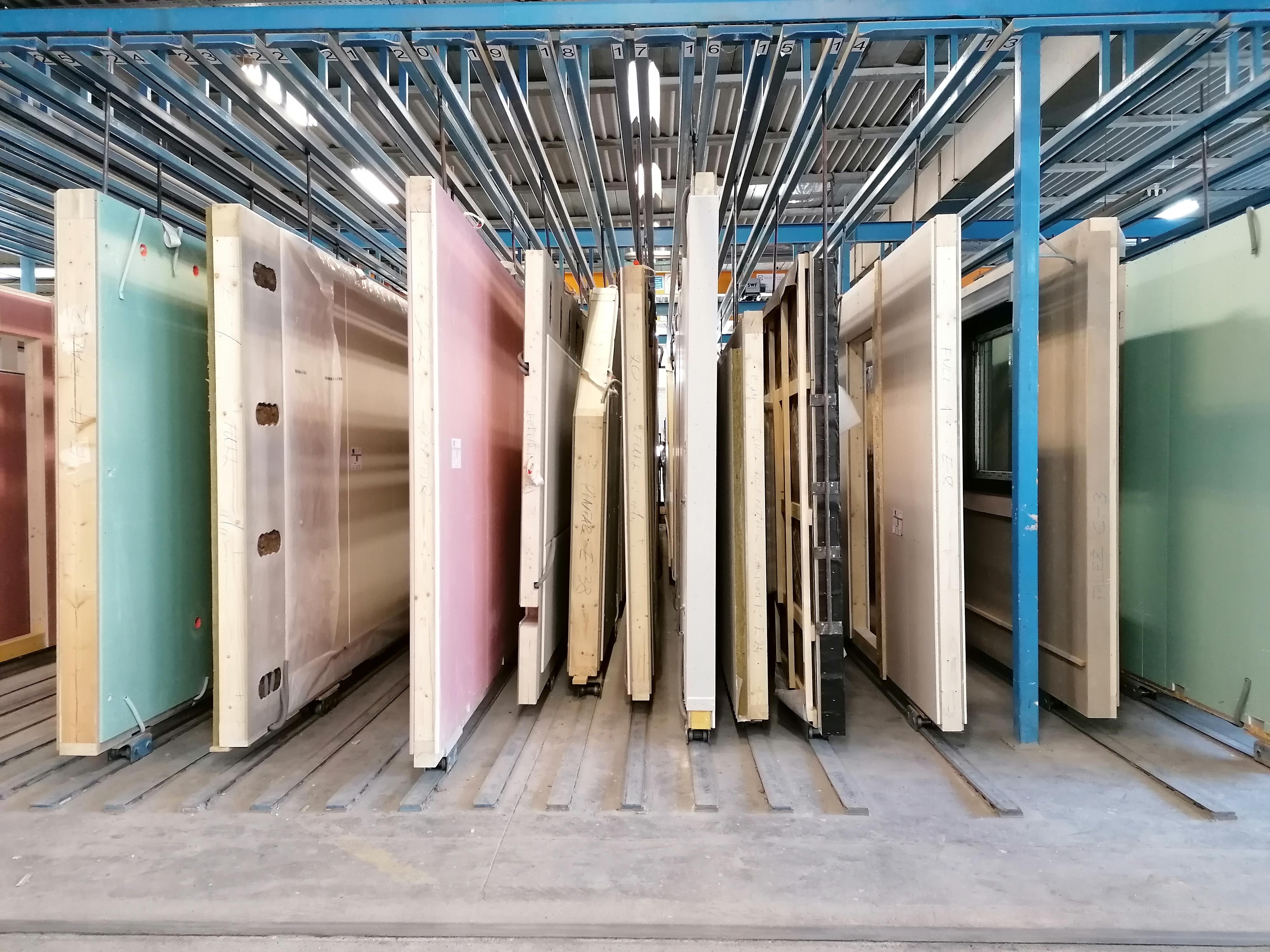
In prefabricated construction, logistics are not a supporting function — they are a core part of the execution strategy.
Punctual Deliveries for Seamless Assembly
For more than 40 years, Jelovica has partnered with established logistics providers to deliver prefabricated elements across Europe. Our drivers are experienced in accessing challenging construction sites and coordinating closely with assembly schedules.
This reliability ensures that elements arrive exactly when needed, avoiding unnecessary storage, rehandling, or site congestion.
Optimised Transport for Cost Efficiency
Transport planning is integrated into the production process itself. By optimising the geometry, volume, and sequencing of prefabricated elements, we consistently achieve up to 90% utilisation of lorry capacity.
For investors, this means:
- lower transport costs per square metre
- fewer deliveries
- reduced environmental impact
More importantly, it ensures that delivery supports — rather than disrupts — the assembly process.
4. Assembly: Fast, Precise, and Labour-Light on Site
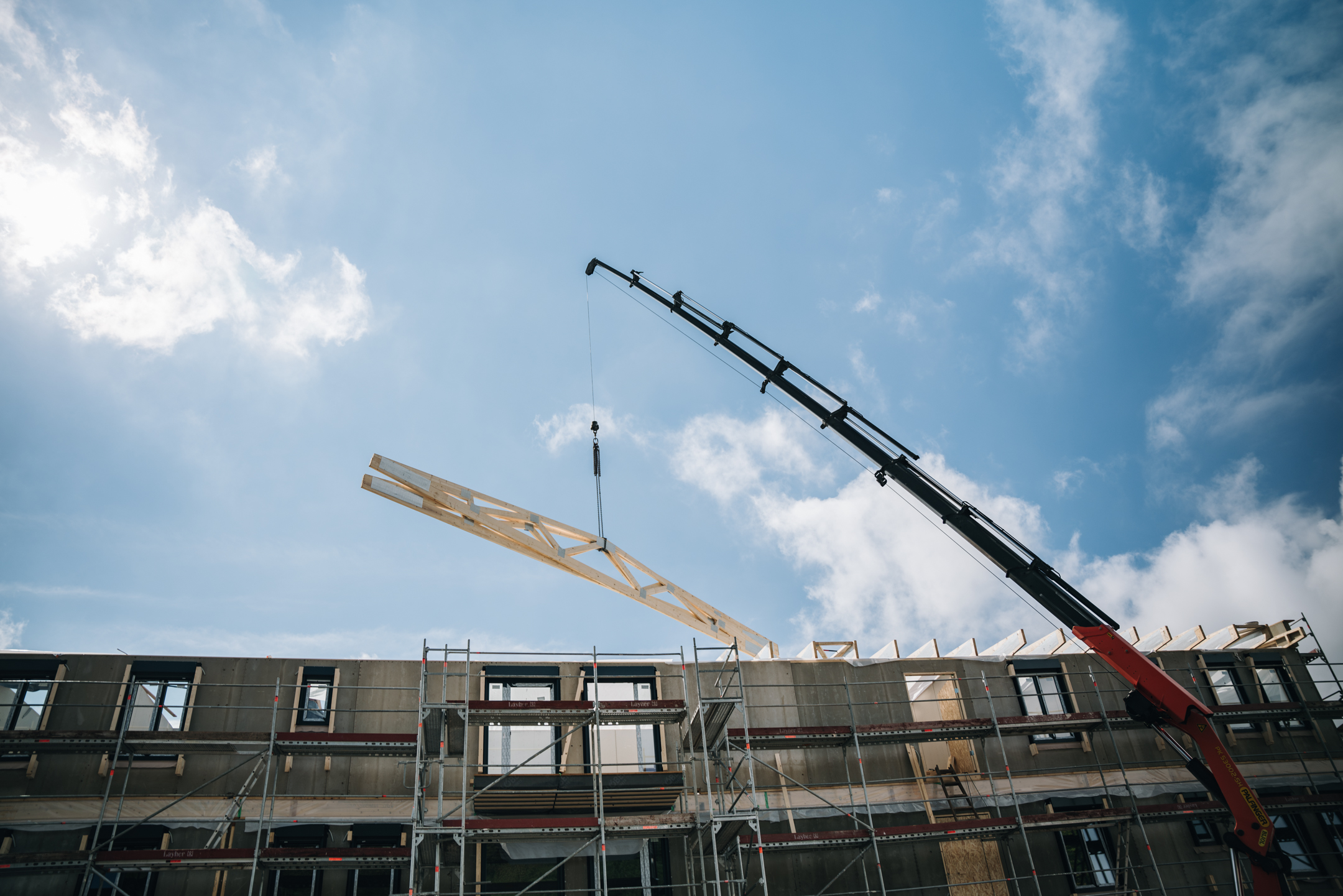
The final phase under Jelovica’s responsibility is assembly — and it is here that the benefits of prefabrication become most visible.
Assembly by Certified Experts
All Jelovica assembly crews are trained and certified specifically for our systems. They are familiar with:
- product details
- connection logic
- national construction practices
- market-specific requirements
This eliminates the learning curves often associated with new systems and ensures consistent execution across projects.
Efficient On-Site Construction
Thanks to the high level of prefabrication, on-site work is reduced to assembly rather than construction.
As a reference point, a Jelovica prefabricated timber house of approximately 150 m² can be fully assembled and weather-tight — including roof tiles — within a single day.
For larger multi-residential projects, this principle scales accordingly:
- fewer workers on site
- shorter exposure to weather
- earlier start of interior works
The result is a significantly shorter and lighter on-site phase, reducing labour dependency, equipment rental time, and overall project risk.
Clear Scope, Clear Responsibilities
Jelovica’s role ends with the delivery of a weather-tight structural shell. From that point onward, finishing works — MEP installations, interiors, façade completion, and commissioning — are handled by the investor.
This clear separation ensures:
- transparency of responsibilities
- flexibility in finishing and market positioning
- controlled risk allocation
Conclusion: Prefabrication as a Strategic Advantage
Jelovica’s approach to prefabricated timber construction is not about replacing traditional building methods — it is about responding intelligently to today’s constraints.
By concentrating labour, precision, and complexity in the factory, and reducing on-site effort to efficient assembly, we help investors and developers regain control over schedules, resources, and risk.
In a market defined by labour shortages and increasing regulatory pressure, this is not simply a construction choice — it is a strategic one.